

NYTimes Connections opens a world of hidden patterns and mental sparks, where sixteen words await discovery and every connection reveals a glimpse into how we think, play, and share ideas across cultures. It begins in silence — eyes scanning a grid of sixteen seemingly unconnected words, heart quickening with possibility. Four groups await discovery. Each tilts the mind toward memory, intuition, and that spark of recognition that comes when seemingly random pieces cohere into patterns. Outside, morning light creeps over the windowsill; inside, fingers hover over a screen, poised to tap the first word. This is NYTimes Connections, a crossword‑esque symphony of language and logic that has quietly woven itself into the daily rhythms of millions — a cultural ritual much like coffee on waking or checking the weather before stepping outside.
Since its debut, Connections has grown far beyond a mere browser tab pastime. It’s become a shared challenge that bridges generations, cultures, and continents — a tapestry of cognition and curiosity stitched together by words that resonate, trick, and delight. (en.wikipedia.org)
Origins of a Puzzle Tradition
In June 2023, at the heart of The New York Times — a bastion of news, culture, and intellectual play — a new word game entered the fold. Connections was born from the Times’ internal Game Jam, where designers and editors pitched fresh ideas for daily engagement. The result was deceptively simple: a game that invited players to find hidden commonalities among words. (en.wikipedia.org)
Unlike the crossword — which traces its history back to 1913, evolving through decades of print and digital play — Connections chose a structural rhythm of four groups of four words. Editor Wyna Liu and her team crafted puzzles that range from straightforward categories to tricky homophones or culturally nuanced connections. The idea, Liu shared in early discussions and editor notes, was to evoke free association — the kind that turns a list of words into a moment of insight. (thewordfinder.com)
Part of Connections’ appeal lies in this balance: enough structure to be fair, yet enough ambiguity to reward unconventional thinking.
How Connections Lives Today
Today, when noon breaks in one time zone and midnight in another, a new Connections puzzle emerges. Accessible via the NYT Games app or the online portal, it draws players into a daily ritual—not just solving but sharing, commenting, and competing quietly with friends. (nytimes.zendesk.com)
Players see sixteen words laid in a 4×4 grid and must identify four groups of four related by a theme. The categories are color-coded by difficulty — Green being easiest, followed by Yellow, Blue, and Purple, with Purple often demanding the most lateral association. (nytimes.zendesk.com)
Simple in presentation, Connections invites deep exploration: Why does a word belong in this group and not another? What cultural cues or linguistic tricks inform the connections? The result is more than a puzzle — it’s a mental mirror reflecting our own associative processes.
Where Connections Resonates
Connections doesn’t belong to any landscape in the geographic sense, yet its presence is global. Players from Asia to the Americas, Africa to Europe engage daily, often comparing their solutions across time zones and languages.
Yet its roots are distinctly tied to English — particularly American English — given the Times’ editorial context. That means some cultural references may land more smoothly for English speakers familiar with Western pop culture, while others require a leap of logic or lookup. (nytimes-connections.net)
On Reddit and discussion forums, multilingual fans create unofficial archives and guides, helping others learn the subtleties of wordplay. From Nairobi to New Delhi, the shared language of challenge draws an unlikely club of intellectual adventurers.
Styles and Variations of Play
While the core mechanic remains uniform — group 16 words into thematic quartets — players experience Connections in various modes and styles:
- Casual Solvers: Seek daily calm and linguistic joy.
- Competitors: Track personal streaks, win ratios, and attempt to complete all categories with zero mistakes. (polygon.com)
- Social Sharers: Post results on social media, comparing colored grids through text and screenshots.
- Archive Explorers: Use unofficial archives to revisit historical puzzles when the official one isn’t accessible. (reddit.com)
The emotional palette is wide: from relaxed reflection to intense scratch‑your‑head puzzlement — all sparked by words and categories.
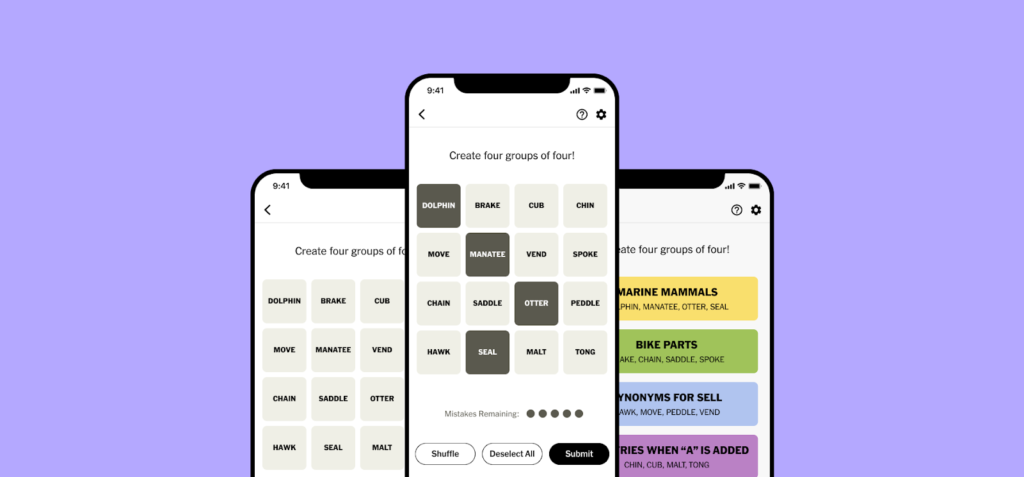
Table 1 – Popular Connections Themes & Their Signature Experience
| Theme Type | Defining Elements | Player Experience |
| Classic Category | Words sharing a clear group (e.g., fish, planets) | Logical, satisfying |
| Wordplay / Homophones | Similar sounds, double meanings | Clever, lateral thinking |
| Cultural References | Movies, songs, famous names | Nostalgic, pop‑savvy |
| Linguistic Tricks | Anagrams, prefixes/suffixes | Challenging, abstract |
The Cultural and Cognitive Impact
What makes Connections more than a diversion is how it intersects broader trends in cognitive play. Puzzle culture has long embraced challenges that combine pattern recognition with word knowledge — from crosswords to Only Connect, a British TV show centered around finding hidden thematic links among word sets. The comparison isn’t accidental: both demand lateral thought and deep lexicon familiarity. (connectionsgame.org)
Researchers have even used Connections puzzles as benchmarks for machine intelligence, noting that human players often outperform advanced AI models due to nuanced pattern recognition that defies simple algorithmic classification. (arxiv.org)
Through its daily cadence, Connections offers players not only trivia and vocabulary practice but also a moment of mindfulness — a pause in a world that rarely stops moving.
Table 2 – Connections Compared to Other Global Word Traditions
| Feature | NYTimes Connections | Traditional Crossword | Only Connect (UK) |
| Mood | Reflective, analytical | Varied — casual to deep | Highly competitive |
| Focus | Thematic grouping | Definitions & clues | Deductive connections |
| Tools | 16‑word grid daily | Puzzle book/newspaper | Timed team challenge |
| Cultural Appeal | Pop culture + language | Global + cross‑cultural | Anglophone trivia |
How to Experience Connections — A Guide
To fully enjoy Connections, be methodical:
- Start with the obvious: Seek clear categories first.
- Work from the edges: Sometimes the toughest group is Purple, often requiring wordplay intuition. (nytimes.zendesk.com)
- Make notes: On mobile or paper, jot down potential links.
- Share and discuss: After solving, sharing helps expand understanding.
- Practice weekly: Patterns often repeat, sharpening your skill.
Unlike speed‑running a crossword, Connections is about moments of insight.
Inside the Editor’s Room: An Interview with Puzzle Designer Wyna Liu
We met in a quiet corner of the NYT Games Studio in Manhattan, early autumn light slanted across shelves of old puzzle drafts. Liu cradled a mug of tea as she reflected on her creation.
Q: What was the spark behind Connections?
Liu: “I wanted something that rewarded curiosity — that moment when you see a pattern others miss. Something simple to start, complex to master.” (thewordfinder.com)
Q: Why the focus on groups of four words?
Liu: “Four creates symmetry — a rhythm in language. It’s predictable enough to be welcoming, yet open enough for surprise.”
Q: How do you balance difficulty?
Liu: “We mix clear semantic categories with wordplay. Some days are easy; others reward persistence and unconventional thinking.” (nytimes.zendesk.com)
Q: What do you hope players take away?
Liu: “Connections isn’t just a game — it’s a daily rendezvous with language. I hope it makes people think differently about words.”
FAQs About NYTimes Connections
Q: Is Connections free to play?
Yes — you can play daily puzzles without a subscription, though signing in helps preserve stats. (nytimes.zendesk.com)
Q: How many guesses are allowed?
Players get up to four mistakes per puzzle before it ends. (makeuseof.com)
Q: Can I revisit past puzzles?
Official archives are rolling out, with some available via NYT subscription, though players also use unofficial sites. (reddit.com)
Q: Does language matter?
While English is central, polyglots and multilingual players enjoy the game — sometimes translating clues into their own associations.
Takeaways
NYTimes Connections stands at the intersection of language, culture, and cognition. It’s not just about solving puzzles — it’s about ritual, shared challenge, and the delight of patterns unfolding. A simple grid of words becomes a canvas for thought. A daily habit becomes a global conversation.
Conclusion: The Future of Word Play
In a world where attention is scattered and screens command ever greater space in our lives, Connections invites us to slow down — to think, to imagine, to find meaning in words. It may be a puzzle, but it’s also a testament to the power of language as a binding force — a daily connection across minds and cultures. (en.wikipedia.org)
Whether you’re a seasoned solver or a curious newcomer, each grid tells a story — and every connection reveals a little more about how we think.