
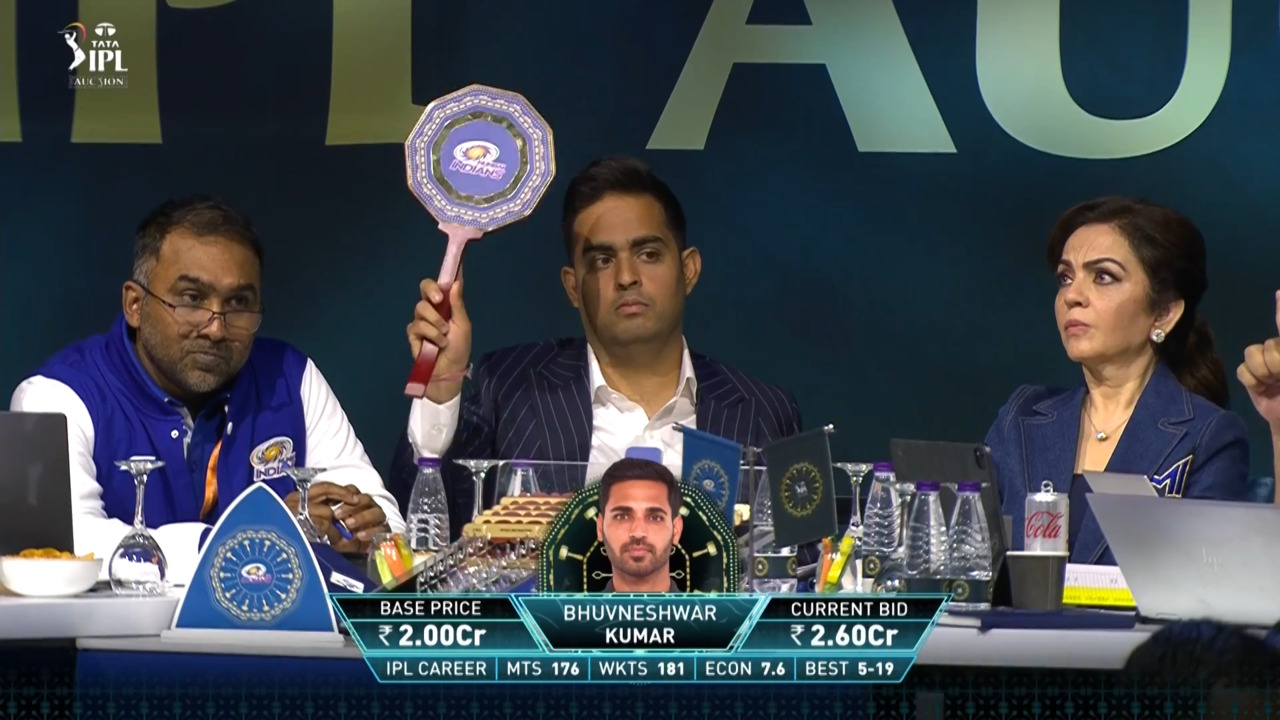
The IPL auction begins in silence, but within seconds it turns into a thunderclap—where the future of cricket careers is rewritten by a raised paddle and a single number on the screen. On a winter morning in a five-star hotel ballroom, the air hums with restrained electricity. Coffee cups tremble slightly on saucers. Franchise owners lean forward, fingers poised over bidding paddles. Screens glow with player statistics—strike rates, economy curves, injury histories—while a single name echoes through the hall. The IPL auction is about to begin.
It is not just a marketplace. It is theatre. Since its inception, the Indian Premier League (IPL) auction has become one of the most emotionally charged events in global sport, where livelihoods pivot on a raised hand and a nod, and where a teenager from a small town can, in seconds, become a millionaire. As with stock exchanges or art auctions, the IPL auction blends cold analytics with human instinct—yet its stakes feel more intimate, more visceral. Cricket, after all, is not merely a game in South Asia; it is memory, identity, and ritual, as explored repeatedly in cultural histories of cricket on platforms like Encyclopaedia Britannica and Wikipedia’s Cricket in India entries.
Origins: How the IPL Auction Was Born
The IPL auction emerged in 2008 alongside the birth of the Indian Premier League itself, a radical experiment inspired partly by global sports leagues like the NFL Draft in the United States and football transfer markets in Europe. According to archival reporting by ESPNcricinfo and early governance documents from the Board of Control for Cricket in India (BCCI), the auction model was chosen to ensure competitive balance and commercial transparency.
Cricket had always known contracts, but never spectacle. Before the IPL, player transfers were quiet affairs governed by boards and bilateral agreements. The auction, by contrast, was public, performative, and unapologetically capitalist—mirroring India’s own post-liberalization confidence, a theme frequently discussed in economic analyses of modern India by outlets like The Economist. The IPL auction turned cricketers into assets, but also into stories.
Modern Significance: The Auction as a Global Event
Today, the IPL auction is livestreamed across continents, dissected on YouTube analytics channels, debated on X (formerly Twitter), and studied in sports management classrooms. Player valuations now rely on advanced metrics—wagon wheels, matchup data, and biomechanics—reflecting broader trends in sports analytics, a field chronicled extensively by MIT Sloan Sports Analytics Conference publications.
Yet, instinct still rules. A franchise might ignore algorithms and bid aggressively because a player “fits the dressing room culture,” a phrase that echoes leadership theories discussed in organizational psychology literature. The auction room, despite its data screens, remains deeply human.
Where It Flourishes: Cities, Capital, and Cricket Culture
Although hosted in controlled indoor venues—often Mumbai or Bengaluru hotels—the IPL auction belongs emotionally to India’s cricketing cities. Mumbai’s legacy as a cricketing powerhouse, Chennai’s reverence for experience, Kolkata’s romanticism, and Hyderabad’s quiet efficiency all influence bidding philosophies. Urban sociology studies of Indian cities, such as those documented by UN-Habitat and Wikipedia’s Indian cities entries, help explain why franchises mirror their home cultures.
International players—from Australia, England, South Africa, Afghanistan—bring global cricketing traditions into the room, turning the auction into a microcosm of globalization itself.
Styles and Variations: Mega Auctions, Mini Auctions, and Strategy
Not all IPL auctions are equal. The mega auction, held every few years, resets team cores entirely. Mini auctions, by contrast, are surgical—filling gaps, replacing injured players, or hedging form risks.
| Auction Type | Defining Features | Strategic Mood |
| Mega Auction | Large player pool, team rebuilds | High risk, long-term vision |
| Mini Auction | Limited slots, targeted buys | Conservative, tactical |
| Accelerated Round | Rapid-fire bidding | Instinct-driven |
| Unsold Player Set | Second chances | Opportunistic |
This structure mirrors portfolio management strategies discussed in finance theory, particularly concepts like diversification and risk appetite, commonly outlined in Investopedia resources.
Cultural and Economic Impact
The IPL auction has redefined social mobility in cricket. Players from associate nations like Afghanistan—where cricket’s rise is often framed within geopolitical narratives by BBC World Service—have found economic security through IPL contracts. Domestically, state-league performers now dream not only of national caps but of auction day.
Critics argue commercialization dilutes tradition, a debate similar to those surrounding global sports leagues and cultural commodification, as discussed in The Guardian’s sports ethics columns. Yet supporters counter that the auction democratizes opportunity.
How to Experience the IPL Auction (Even If You’re Not in the Room)
For fans, the IPL auction season is ritualistic. Preparation involves tracking player performances on platforms like Cricbuzz, understanding salary caps outlined by the BCCI, and following expert mock auctions.
Key essentials:
- Timing: Usually held between December and February.
- Access: Official IPL livestreams and broadcaster coverage.
- Safety & Integrity: Governed by anti-corruption frameworks aligned with ICC Anti-Corruption Codes, detailed on icc-cricket.com.
Global Comparison: How the IPL Auction Stands Apart
| Feature | IPL Auction | NFL Draft (USA) | European Football Transfers |
| Mood | High drama, open bidding | Structured, sequential | Negotiated, private |
| Player Agency | Moderate | Limited | High |
| Cultural Focus | Entertainment + merit | Parity | Club legacy |
| Main Appeal | Unpredictability | Fairness | Prestige |
Unlike drafts or transfer windows, the IPL auction blends transparency with spectacle, making it closer to art auctions documented by institutions like Sotheby’s than to traditional sports recruitment.
Voices from the Room: An Auction Insider Speaks
Location: A quiet corner of a Mumbai hotel lobby, hours after an auction concludes. The hum of ceiling fans mixes with distant traffic.
Interviewee: Former IPL team strategist (name withheld)
Q1: What does the IPL auction feel like from inside?
A: “Controlled chaos. You prepare for months, but one bid can undo everything.”
Q2: How much is data versus gut feeling?
A: “Data gets you to the table. Instinct wins the player.”
Q3: Do players know their real value?
A: “Not always. The auction teaches humility and hope—sometimes both in one minute.”
Q4: Has the auction changed cricket culture?
A: “Absolutely. It’s made cricket a career, not just a calling.”
Q5: What stays with you after it ends?
A: “Silence. After all that noise, silence—and a balance sheet.”
Key Takeaways
- The IPL auction is both economic mechanism and cultural ritual.
- It blends analytics, instinct, and entertainment.
- It has reshaped global cricketing careers and fandom.
- Its influence extends beyond sport into media, economics, and culture.
FAQs
Is the IPL auction fair to all players?
Largely yes, under BCCI and ICC regulations, though market dynamics influence outcomes.
Why do some players go unsold?
Team combinations, budget constraints, or recent form—factors common in labor markets worldwide.
Can uncapped players earn more than stars?
Yes. Scarcity and team needs can inflate prices dramatically.
How transparent is the process?
Rules and salary caps are publicly documented by the IPL and BCCI.
Conclusion: The Future of the IPL Auction
As cricket evolves alongside technology—AI scouting, biometric tracking, virtual fan engagement—the IPL auction will adapt. Yet its soul will remain unchanged. Somewhere between a raised paddle and a hopeful glance lies the essence of modern cricket: ambition meeting opportunity in real time.
The IPL auction is not merely where teams are built. It is where futures are imagined—and sometimes,
References
- Board of Control for Cricket in India (BCCI) – Official IPL governance, auction rules, salary caps, and integrity framework
https://www.bcci.tv - Indian Premier League – Official Website – Auction formats, team structures, player pools, and historical auction data
https://www.iplt20.com - ESPNcricinfo – In-depth reporting on IPL auctions, player valuations, franchise strategies, and historical analysis
https://www.espncricinfo.com - International Cricket Council (ICC) – Anti-corruption codes, player eligibility rules, and global cricket governance
https://www.icc-cricket.com - The Economist – Analysis on sports commercialization, auction economics, and India’s post-liberalization economy
https://www.economist.com - BBC Sport – Coverage of global cricket, rise of associate nations, and IPL’s international impact
https://www.bbc.com/sport/cricket - MIT Sloan Sports Analytics Conference – Research on data-driven decision-making in professional sports
https://www.sloansportsconference.com - Investopedia – Auction theory, asset valuation, salary caps, and risk management concepts used in sports economics
https://www.investopedia.com - Encyclopaedia Britannica – Cricket – Historical and cultural background of cricket as a global sport
https://www.britannica.com/sports/cricket-sport - Wikipedia – Indian Premier League – Structural overview, franchise history, auction evolution, and season records
https://en.wikipedia.org/wiki/Indian_Premier_League - The Guardian – Sports Section – Ethical debates on commercialization, athlete labor markets, and fan culture
https://www.theguardian.com/sport - UN-Habitat – Urban culture and city identity influencing sports franchises and regional branding
https://unhabitat.org